
English| EUR
Suggested for you
More currencies
Choose a language
Georgetown's cobblestone streets and Federal-row houses conceal two centuries of documented hauntings and local legend. This guide catalogs the neighborhood's most persistent ghost stories, the historical events behind them, and the walking routes that connect the sites.
Quick answer
Georgetown ghost stories center on nine documented locations spanning 1751 to the 1970s, including Revolutionary War–era taverns, the Old Stone House (built 1765), the Exorcist steps on Prospect Street, and the former site of Halcyon House. Most tales involve residual hauntings tied to specific addresses along M Street, Prospect Street, and the C&O Canal towpath. Evening walking tours operate daily from 7:00 PM to 9:00 PM, departing from 3051 M Street NW.
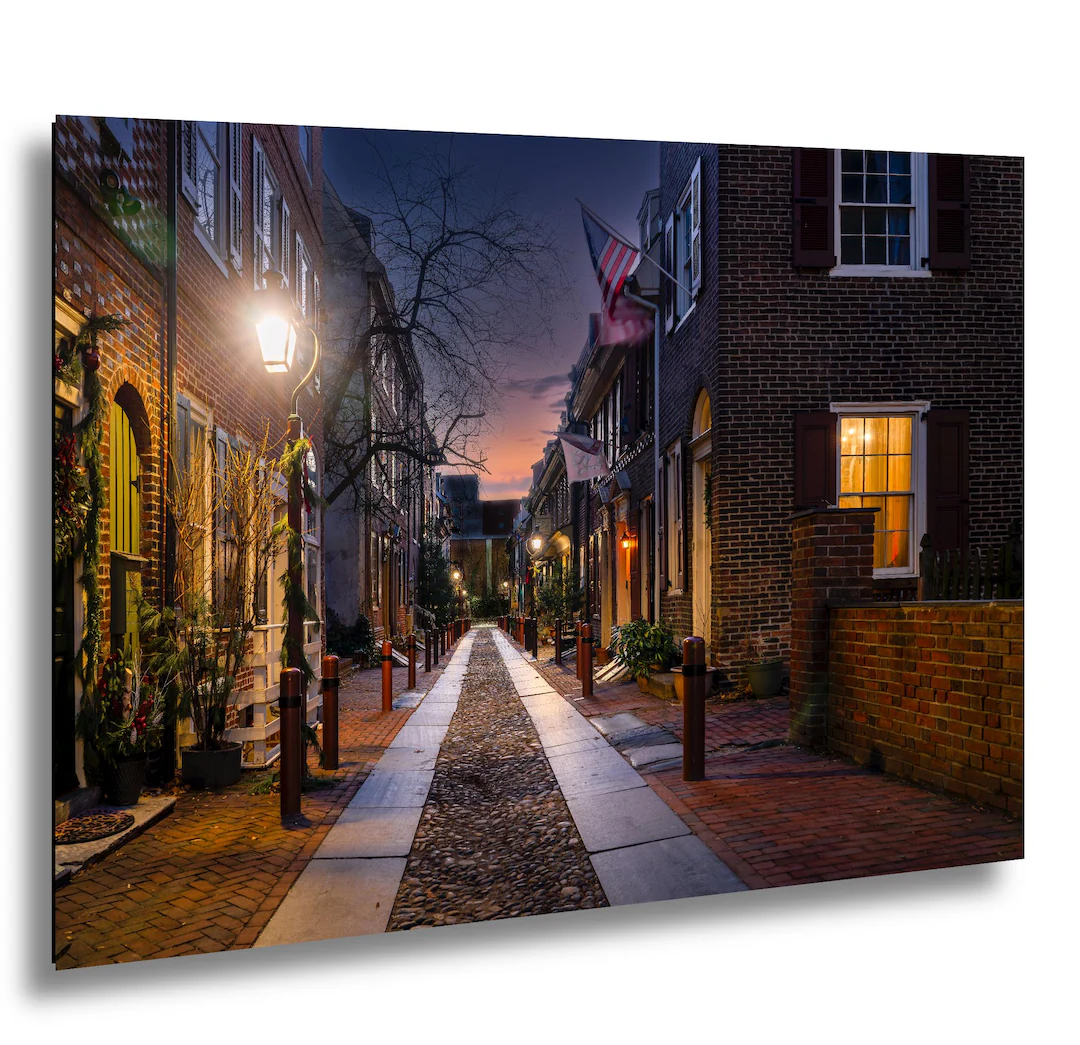
The Old Stone House at 3051 M Street NW—built in 1765 and now Georgetown's oldest standing structure—anchors the neighborhood's most enduring spectral claim: the figure of a colonial-era woman seen in upper windows after dark. Park Service records document visitor reports dating to the 1950s, though no confirmed death occurred in the building. The persistence of the sighting, separated by decades and unconnected witnesses, earned the house a place in regional folklore collections. Georgetown's haunted reputation predates the District itself. The port town's taverns served as Revolutionary War staging points, and local legend attributes residual activity along the waterfront to soldiers who died in makeshift hospitals. The Exorcist steps—75 stone risers connecting Prospect Street to M Street—gained national attention after the 1973 film, but the site's association with unease traces to earlier decades when neighbors reported hearing footsteps ascending the empty staircase at night. William Peter Blatty, the novel's author, lived two blocks away and set his fictional possession in a Georgetown row house, cementing the neighborhood's Gothic associations. Halcyon House on Prospect Street, built in 1787 by Benjamin Stoddert, the first Secretary of the Navy, accumulated stories of apparitions in period dress and unexplained cold spots during its decades as a private residence and later as a university building. Architectural renovations in the early 20th century—when owner Albert Clemens added labyrinthine additions—further layered the house's mystique. The structure remains private, but its silhouette against the Potomac remains a fixture of walking tour itineraries. Modern ghost tour operators trace routes connecting these anchors with lesser-known addresses: the former site of a Civil War hospital on N Street, the canal lock keeper's house on the C&O towpath, and the row house at 3600 Prospect Street where reporters documented unexplained phenomena in the 1980s. The stories blend verifiable history—yellow fever outbreaks, wartime casualties, structural fires—with atmospheric legend. Evening tours depart nightly, optimal lighting occurring between 7:00 PM and 8:30 PM when the brick sidewalks and gas-lamp replicas cast long shadows. Participants walk roughly two miles over 90 minutes, encountering the neighborhood's Federal architecture and hearing narrations of its darker folklore along the way.
“The Old Stone House remains Georgetown's oldest standing structure and its most consistently reported haunted address, with sighting records spanning seven decades.”
Georgetown ghost stories walking tours operate on a consistent schedule throughout the week to provide evening atmosphere. Tours are available daily from Monday through Sunday.
Georgetown's dark reputation emerged long before it became Washington's most fashionable neighborhood. Founded in 1751 as a colonial tobacco port along the Potomac, the settlement quickly grew into a hub of transatlantic commerce where enslaved Africans were bought and sold alongside cargo. By the 1780s, Georgetown housed one of the region's largest slave markets, and the brick townhouses that now command millions were built by enslaved laborers whose suffering left indelible marks on the cobblestone streets. The district's oldest structures—including the Old Stone House on M Street, dating to 1765—stand as silent witnesses to centuries of human tragedy that fuel the Georgetown ghost stories visitors seek today. The Civil War era deepened Georgetown's spectral associations. The neighborhood's proximity to the capital made it a natural site for military hospitals, and dozens of wounded soldiers died in converted mansions and warehouses between 1861 and 1865. The Exorcist stairs, built in 1895 at the end of Prospect Street, gained notoriety not from the 1973 film alone but from decades of local lore about a young seminarian who fell to his death on the steep stone steps in the early twentieth century. Residents reported apparitions near the C&O Canal, where laborers perished during the waterway's construction in the 1820s and 30s, their bodies often buried in unmarked graves along the towpath. By the mid-twentieth century, Georgetown had transformed into an enclave of diplomats and academics, yet the architecture preserved its Gothic undertones. Federal-period rowhouses with iron gates, narrow alleyways lit by gas lamps, and the looming spires of Georgetown University created an atmosphere ripe for supernatural interpretation. Today's evening walking tours follow routes past the Halcyon House on Prospect Street—rumored to harbor the restless spirit of its eccentric builder, Benjamin Stoddert—and the former site of the Georgetown Female Seminary, where visitors still photograph unexplained shadows in upper-story windows. The physical fabric of the past remains visible: brick walls marked by iron slave shackles, uneven flagstones where coffins were carried, and the dark waters of the canal reflecting two and a half centuries of sorrow.
Georgetown founded as colonial tobacco port and becomes center of regional slave trade
Old Stone House constructed on M Street, oldest surviving structure in original DC boundaries
C&O Canal construction claims numerous laborers' lives, bodies buried along towpath
Civil War transforms Georgetown mansions into military hospitals where hundreds of soldiers die
Prospect Street stone stairs built, later site of fatal fall and decades of reported apparitions
The Exorcist film amplifies Georgetown's haunted reputation, drawing national attention to local lore
Federal preservation laws protect Georgetown's 19th-century architecture, maintaining atmospheric settings for ghost tours
Georgetown's historic terrain presents challenges for visitors, including uneven brick sidewalks and a notable 75-step count throughout the tour route. Guests should be prepared for navigation over varied elevations and traditional cobblestone surfaces.
The historic nature of the streets limits access in certain areas.
The walking tour route includes a total step count of 75.
Private operators can often adjust the pace for guests requiring extra time.
Everything you need to know about georgetown ghost stories
Many georgetown ghost stories are rooted in the rich colonial history and documented tragedies of the area. These narratives often blend folklore with the architectural heritage of historic landmarks to create a compelling local experience.
The best arrival window for evening walking tours is 19:00–20:30 to ensure optimal lighting and atmosphere. Exploring these urban legends during this time enhances the eerie mood often associated with a D.C. supernatural walk.
There is no entrance fee for these walking tours, as they are often offered by private operators. While the experience is free to join, participants often choose to provide a gratuity to their guide for the service.
While georgetown ghost stories are generally engaging, parents should consider the eerie nature of the content before bringing children. The tours involve walking through historic streets and listening to darker themes that may not suit younger visitors.
The tour route includes 75 steps that participants must navigate during the walk. Please keep this in mind if you have concerns regarding physical accessibility or mobility.
All tours begin at 3051 M Street NW, Washington, DC 20007. This central location serves as the starting point for exploring the neighborhood's most famous haunted sites.